Photograph a paper outline, let Formillionaire detect the sheet and the shape, dial in holes and taper, and export a print-ready STL — entirely in your browser. No account, no uploads, no backend.
Pair your printed and exported plate with a professional 3d hat making tool.
Starter Kit
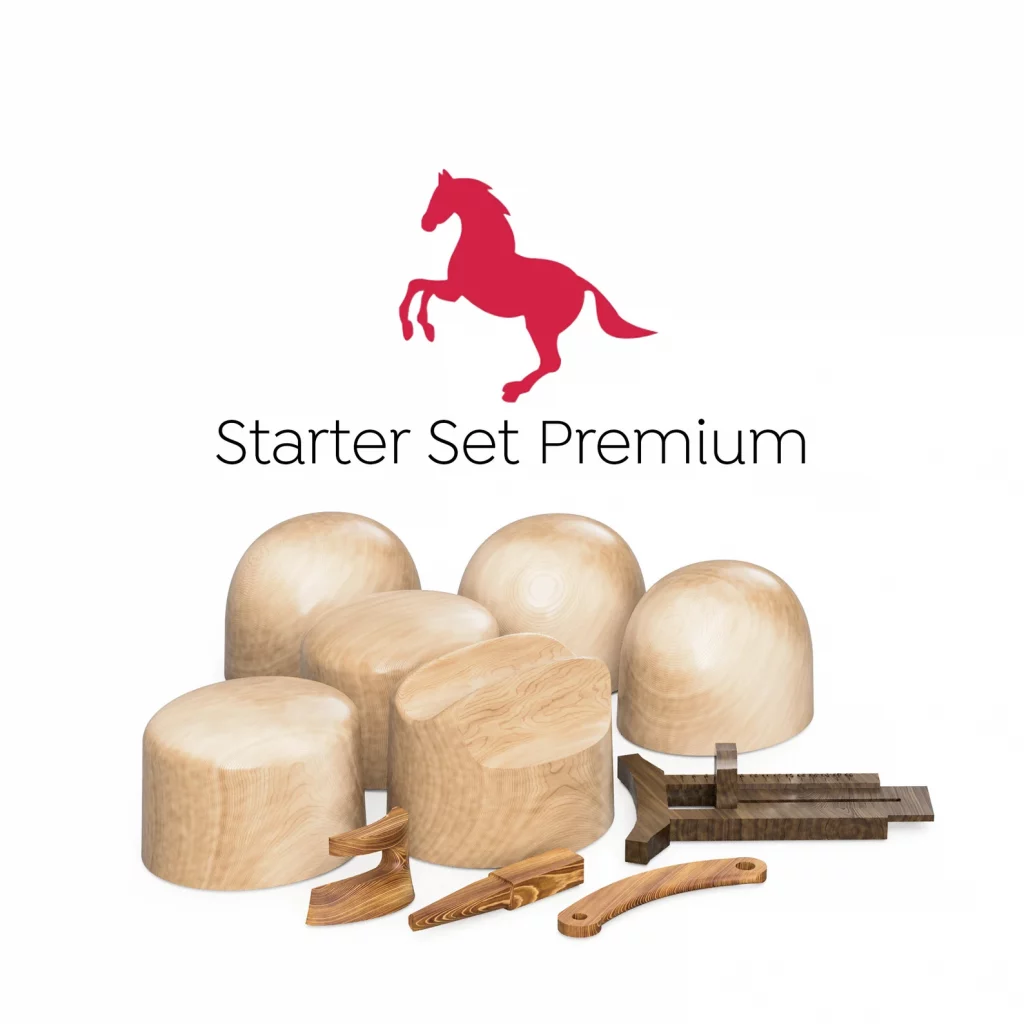
A complete hat-maker's starter kit — everything a beginner needs to get started, bundled as one download: a cattleman crown block, two open-crown blocks, and three hand tools (a pusher…
Sold via our Etsy shop — this site doesn't process payments directly.
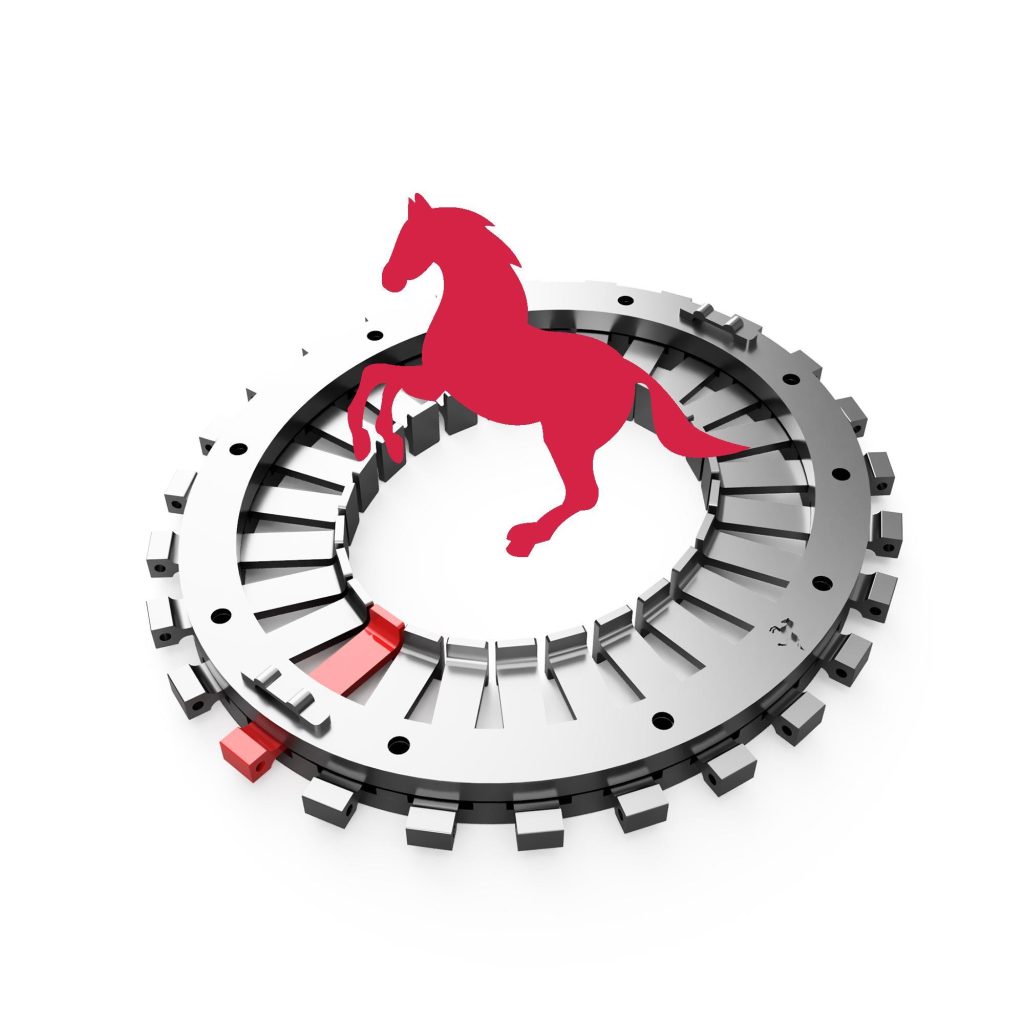
A build-it-yourself conformateur — the classic millinery tool used to measure a precise head shape and size and transfer it onto paper or a block, for made-to-measure hats, historical reproductions,…
Sold via our Etsy shop — this site doesn't process payments directly.
The whole pipeline runs in your browser — upload once, adjust live, export whenever you're happy with the preview.
Print a blank A4 sheet and hand-trace your brim outline on it, or draw directly on a printed template.
Snap a photo of the sheet with your phone or upload one — any angle works, as long as the whole sheet is visible.
Formillionaire finds the sheet and the ink outline automatically, then smooths it into a clean curve. Drag corners or points if it needs a nudge.
Add the center + axis hole layout, dial in a conical taper, preview the plate in 3D, and download a print-ready binary STL.
No CAD software, no measuring tape, no round-trips to a print shop. Just a printed sheet, a pen, and your phone.
Sheet and contour detection run entirely in your browser via OpenCV.js. Nothing is uploaded, stored, or sent to a server — ever.
Outlines are smoothed into a continuous curve automatically, so a slightly jagged trace still prints like a clean, ellipse-like head shape.
Toggle a fixed 25mm center hole plus two 45mm axis holes with a configurable diameter — sized and positioned automatically to fit your outline.
Dial in 0–5mm of taper and the entire side wall cones from a full-size base to an inset top — a real frustum, not a cosmetic edge bevel.
The detected outline's circumference is converted straight to a European hat size, rounded to the nearest half size, so you know what you're printing.
Auto-detection fails gracefully: drag-adjust the sheet corners or the outline points yourself whenever lighting or contrast throws off the algorithm.

No. Sheet detection, contour detection, and 3D generation all run locally in your browser. There is no backend and no image ever leaves your device.
Both the sheet-corner detection and the outline detection have a manual fallback. You can drag corner handles or outline points directly on the photo until the shape matches your trace exactly.
A4. Print a blank sheet (or one with a template), trace your outline on it, then photograph the whole sheet with good, even lighting and a contrasting background for the most reliable auto-detection.
Enabling it adds a fixed 25mm hole at the center of your shape plus two more holes 45mm above and below it on the same axis — all cut completely through the plate regardless of thickness. The axis hole diameter is adjustable.
Yes. Setting a taper value cones the entire outer wall from the full-size outline at the base to the same outline inset by that amount at the top — a true frustum shape, not just a rounded top edge.
It's computed from the detected outline's circumference in centimeters, rounded to the nearest half size (e.g. 58.3cm reads as size 58.5) — the same convention used for European hat sizing.
A binary STL sized in real-world millimeters, ready to slice and print on any FDM or resin printer without further scaling.
No. The generator is completely free to use while it's in this early stage — no account, no sign-up, no limits.